
Ujjain is known around the world for its deep spiritual heritage. From the sacred Mahakaleshwar Temple to its long-standing traditions of meditation, yoga and spiritual practices, the city has always attracted people seeking inner growth and healing.
In recent years, Reiki healing and energy healing courses in Ujjain have also become increasingly popular. Many people are now looking for authentic Reiki training—not only to learn energy healing for themselves, but also to develop a deeper understanding of life-force energy and eventually support others through their healing journey.
However, with so many options available, one important question arises:
How do you choose the best Reiki course in Ujjain?
The answer is not simply about finding the cheapest course or the course that promises the fastest certificate. A genuine Reiki education should be based on authentic training, a clear lineage, structured progression, practical experience and continued guidance.
Here are the most important things you should look for before enrolling in a Reiki course in Ujjain.
- Look for a Clear and Verifiable Reiki Lineage
One of the first things you should ask a Reiki teacher is:
Where did you learn Reiki, and who was your teacher?
A genuine Reiki teacher should be able to clearly explain their training journey, teachers and lineage. Lineage helps students understand the tradition through which the Reiki teachings have been transmitted. It also gives you an opportunity to understand the experience and background of the person who will be guiding you. When choosing a Reiki course in Ujjain, don’t hesitate to ask about the teacher’s experience, training and teaching history.
Why does experience matter?
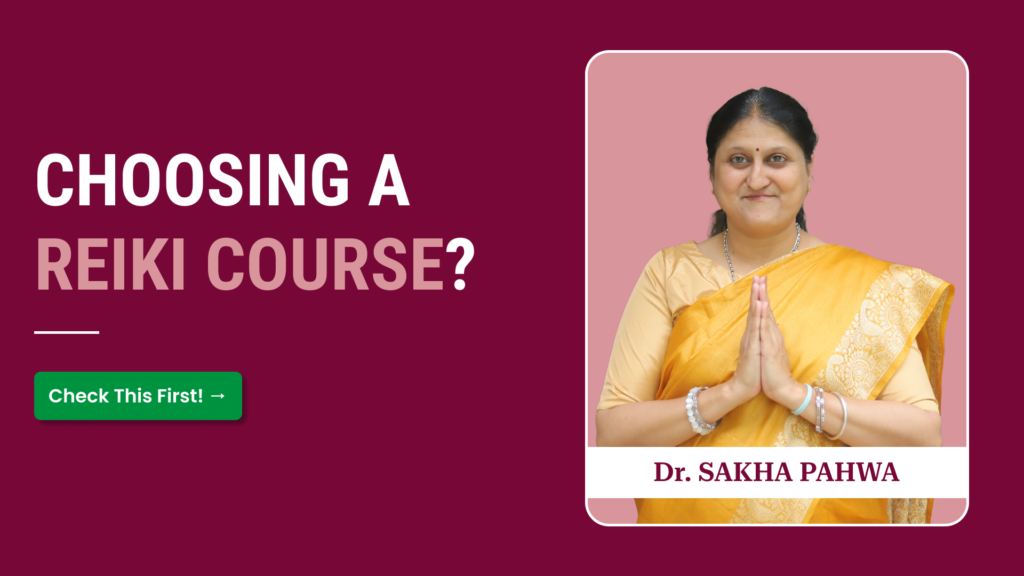
Reiki is not only about learning a few techniques from a manual. With consistent practice and experience, students gradually develop a deeper understanding of energy awareness, meditation, self-healing and working with others. At Aparimit Energy Healing’s Reiki, the training is guided by Dr. Sakha Pahwa (Maa Sakha), a Reiki Grand Master with 25+ years of experience in Reiki, who has been teaching and practicing Reiki for many years. The approach combines Reiki practices with an understanding of Indian energy traditions, creating a structured learning journey for students.
- Choose a Course With Structured Reiki Degrees
A good Reiki education should have a clear progression. Instead of trying to learn everything in one rushed workshop, students should have the opportunity to build their knowledge and practice gradually.
A structured Reiki journey can include:
1st Degree Reiki – Foundation and Self-Healing
The first degree is generally where beginners start their Reiki journey. It focuses on developing a personal relationship with Reiki and understanding foundational practices such as:
* Introduction to Reiki and life-force energy
* Self-healing practices
* Reiki meditation
* Energy awareness
* Hand positions and Reiki practice
* Developing a regular healing routine
If you are completely new to Reiki, a properly structured 1st Degree Reiki Course can provide the foundation for your journey.
- 2nd Degree Reiki – Deeper Energy Work
After developing a foundation through first-degree practice, students who wish to continue can progress to the second degree. 2nd Degree Reiki introduces deeper practices and techniques for those who want to expand their understanding of energy healing. Depending on the Reiki system and teacher, this level may involve working with Reiki symbols, intention, emotional healing and distance healing practices. The important thing is that the student receives sufficient explanation, practice and guidance rather than simply being given techniques and a certificate.
Why is practice important?
Learning a technique intellectually is different from developing confidence through regular practice. A good teacher should encourage students to practice consistently and understand their experiences rather than simply completing a workshop.
- 3rd Degree Reiki – Advanced Healing and Mastery
For students who want to take their Reiki journey further, the third degree represents an advanced stage of training. At Aparimit Energy Healing Reiki, the advanced journey can be explored through different levels of training depending on the student’s goals.
3rd A Degree – Advanced Reiki Healing
This level is intended for students who want to deepen their understanding and practice of Reiki healing. It can be a natural progression for practitioners who have already developed a strong foundation and want to explore advanced energy-healing practices.
3rd B Degree – Reiki Master Teacher
Students who wish to move toward teaching Reiki can explore the 3rd B Reiki Master Teacher path. Becoming a Reiki Master Teacher should ideally be approached as a responsibility rather than simply another certificate. Teaching involves understanding the practices deeply enough to guide other students responsibly.
- Hands-On Practice Matters More Than Just Theory
One of the biggest things to check before joining a Reiki course is:
How much practical training is included?
A Reiki course should not be limited to lectures, presentations or theoretical explanations. Students benefit from actually practicing what they learn.
A strong course should provide opportunities to understand:
* How to practice Reiki on yourself
* How to prepare for a healing session
* How to maintain focus and intention
* How to observe your own experiences
* How to practice Reiki with others
* How to approach distance healing practices, where included in the curriculum
* How to develop a consistent personal practice
Practical guidance can make a significant difference in a student’s confidence.
- Be Careful About Unrealistic Healing Claims
This is one of the most important things to consider when choosing a Reiki course. Be cautious of anyone who claims that Reiki is a guaranteed cure for a particular disease or that Reiki can replace medical treatment. A responsible Reiki teacher should explain that Reiki is generally used as a complementary spiritual and relaxation practice, and it should not replace appropriate medical diagnosis or treatment. Your Reiki education should encourage responsible practice, self-awareness and holistic wellbeing rather than unrealistic promises.
- Look Beyond the Certificate
A certificate can mark the completion of a course—but it should not be the end of your learning journey. Ask your teacher:
What happens after I complete the course?
Will you be able to ask questions?
Will you receive guidance while practicing?
Are there advanced courses?
Is there a community of practitioners?
Can you continue learning?
These questions can help you understand the long-term value of the course.
At Aparimit Energy Healings, students can continue their journey through Advanced Courses and deeper energy-healing learning.
What Makes a Good Reiki Course in Ujjain?
Before enrolling, look for these important qualities:
✔️ Experienced Teacher
Check the teacher’s training, experience and teaching background.
✔️ Clear Lineage
Understand where the teacher learned Reiki and the tradition through which they were trained.
✔️ Structured Curriculum
The course should clearly explain what is covered at each Reiki degree.
✔️ Practical Training
There should be sufficient opportunity for practice, questions and feedback.
✔️ Responsible Approach
Avoid exaggerated promises or guaranteed medical claims.
✔️ Continued Guidance
A good Reiki journey should ideally provide opportunities for continued learning after the initial course.
✔️ Advanced Learning
Students should have a clear path if they eventually wish to explore advanced Reiki healing or Reiki teaching.
Why Learn Reiki in Ujjain?
There is something unique about learning spiritual practices in a city with such a rich spiritual atmosphere. Ujjain has been associated with spirituality, meditation, temples and ancient Indian traditions for centuries. For many students, learning Reiki here becomes more than simply attending a class.
It can become an opportunity to:
* Develop a regular meditation practice
* Explore energy awareness
* Practice self-healing
* Understand one’s emotions more deeply
* Create greater inner awareness
* Connect with like-minded people
* Explore a long-term spiritual practice
At the same time, the quality of the teacher and curriculum remains more important than the location alone.
Frequently Asked Questions
Can Beginners Join a Reiki Course in Ujjain?
Yes. You do not necessarily need previous experience in Reiki, healing or spirituality to begin. A properly designed Reiki First Degree Course should introduce the foundational concepts gradually so that a complete beginner can understand and practice them. The important thing is to choose a teacher who is willing to explain the concepts clearly and provide appropriate guidance.
Is It Necessary to Complete All Three Reiki Degrees?
No. You don’t have to decide at the beginning that you must complete every degree. Many students begin with 1st Degree Reiki, develop their personal practice and then decide whether they want to continue to the second or advanced levels. Your Reiki journey can progress according to your interest, experience and commitment. Some people are primarily interested in self-healing and personal growth, while others eventually want to become professional Reiki practitioners or Reiki teachers.
What Should You Check Before Paying for a Reiki Course?
Before making your decision, have a conversation with the teacher or institute and ask:
- What is included in the curriculum?
- Who is the Reiki teacher?
- What is their Reiki training and lineage?
- How many years have they been practicing and teaching?
- How much practical training is included?
- What support is available after the course?
- What does the certificate represent?
- What are the next levels of training?
- Is the course suitable for complete beginners?
- Are the claims about Reiki realistic and responsible?
Taking a little time to ask these questions can help you make a more informed decision.
How long does a complete Reiki course take?
The duration varies depending on the Reiki degree, teacher and curriculum. A meaningful Reiki journey is generally better approached through consistent learning and practice rather than trying to complete everything in a rushed session. 3 to 4 days and total 6 to 8 hours are sufficient for each level. weekend classes are being conducted regularly.
Can beginners learn Reiki?
Yes. Beginners can start with first-degree Reiki without necessarily having previous experience in energy healing.
What is 1st Degree Reiki?
1st Degree Reiki is generally the foundational level of Reiki training. It introduces students to Reiki principles, self-healing, meditation and basic Reiki practices.
Learn more about **[1st Degree Reiki](https://aparimitenergyhealings.org/1st-degree-reiki/)**.
What is 2nd Degree Reiki?
2nd Degree Reiki is an advanced level of training that builds upon the first-degree foundation and may introduce deeper energy practices, symbols and distance-healing techniques depending on the Reiki system and teacher. Learn more about 2nd Degree Reiki.
What is 3rd Degree Reiki?
3rd Degree Reiki is generally considered an advanced level of Reiki education. Students may explore advanced healing practices and, depending on the training system, progress toward Reiki Master Teacher training.
Can Reiki be learned online?
Some Reiki teachers offer online training, while others conduct in-person classes. The important factor is the quality of instruction, structure, practical guidance and post-course support.
Is Reiki a medical treatment?
Reiki should not be presented as a replacement for medical diagnosis or treatment. It is commonly approached as a complementary practice for relaxation, wellbeing, meditation and spiritual development.
Does Reiki involve life-force energy?
Yes. The concept of universal life-force energy is fundamental to Reiki. Reiki training introduces students to practices intended to work with this energy through focused intention and established techniques.
Start Your Reiki Journey in Ujjain
Choosing the best Reiki course in Ujjain is ultimately about choosing the right teacher and the right learning environment—not simply the course with the most attractive advertisement.
Look for:
*Authentic training.*
*Experienced guidance.*
*Clear lineage.*
*Structured degrees.*
*Practical learning.*
*Responsible teaching.*
*And continued support.*
If you are ready to begin, you can start with a structured 1st Degree Reiki Course and gradually progress toward 2nd Degree Reiki and advanced Reiki training. For practitioners who wish to go further, the journey can continue toward 3rd A Advanced Reiki Healing and 3rd B Reiki Master Teacher training. At *Aparimit Aarogyam Reiki, Dr. Sakha Pahwa (Maa Sakha), a Reiki Grand Master with 25+ years of experience, guides students on their Reiki learning journey. Your Reiki journey does not have to be rushed. Learn. Practice. Experience. And grow—one step at a time.
Explore Reiki Courses
*1st Degree Reiki:*
https://aparimitenergyhealings.org/1st-degree-reiki/
*2nd Degree Reiki:*
https://aparimitenergyhealings.org/2nd-degree-reiki/
*Advanced Reiki Courses:*
https://aparimitenergyhealings.org/advanced-courses/
*Website:*
https://aparimitenergyhealings.org/
Final Thought
Reiki is a journey of practice rather than just a certificate.
The right teacher can give you a foundation, but your daily practice, awareness and commitment are what allow that learning to become a meaningful part of your life.
If you are searching for a Reiki Course in Ujjain, take your time, ask questions and choose a learning path that values authenticity, practical experience and responsible guidance.
समस्या है तो समाधान भी है।